
Printed Rollstock Packaging Film: Uses & Line Requirements

Choosing rollstock packaging film for your line
Printed rollstock is a continuous web of packaging film or laminate wound on a core for form-fill-seal equipment. It is used for snacks, frozen foods and sachets. Film width, print repeat and unwind direction must match the packing line, while the laminate’s handling and sealing behavior need to suit the forming process.
Printed rollstock specifications
Parameter | Specification |
|---|---|
Film and packing line | Printed film or laminate for compatible vertical or horizontal form-fill-seal equipment. |
Web and print dimensions | Film width is measured across the web; print repeat is the distance along it between repeated artwork. Registration marks and fin- or lap-seal positions follow the machine drawing. |
Core inner diameter (ID) | 76 mm inner diameter option, measured across the core opening that fits the machine shaft. |
Roll size limits | Packing-machine limits define the maximum roll outer diameter (OD, mm) and roll weight (kg). |
Unwind direction | A winding diagram shows the print orientation, leading edge and how the film feeds off the roll. |
Gravure printing MOQ | 6,000 linear metres of printed film, measured along the web. |
Quotation | Itemized quotation within 24 business hours. |
Prepare a rollstock brief for your packing line
Structure and filled-pack checks
Rollstock is a continuous web of packaging film or laminate wound on a core. The packing line converts it into the final shape. Film construction, surface friction, stiffness and sealing behavior interact with the forming and sealing process; the artwork is only one part of the specification.

Construction details
Use the details below to review the drawing, filling process and filled sample.
1. Print repeat and registration
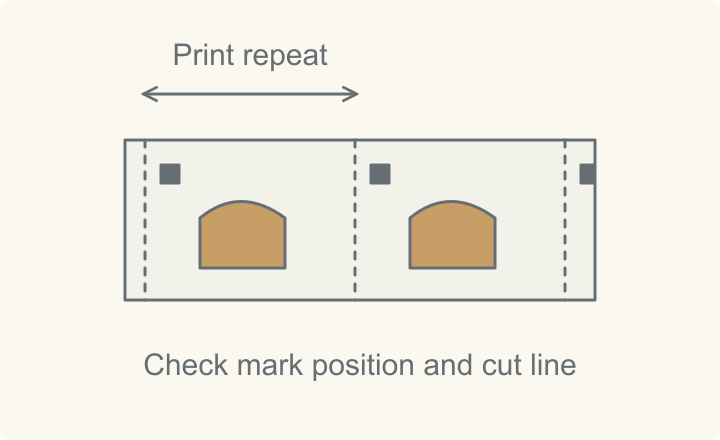
Align the repeated artwork with cutting. Confirm repeat length and registration-mark position with the machine supplier. A visible mark is only part of the print-to-cut setup.
2. Unwind direction

Show the print orientation from the roll. Agree a clear unwind diagram showing the outside print face and the leading edge. Opposite winding orientations can change how artwork enters the line.
3. Web, core and roll size

Confirm machine fit before production. Specify web width, core dimensions and the permitted roll diameter or weight. Also review sealing conditions and the intended fin- or lap-seal route.
Common applications
Snacks and dry portions
Compatible vertical or horizontal equipment can produce packs from a printed web. Review product drop, crumbs in seals, pack length and registration. A change in film or product can alter the settings that previously worked.
Powders and sachets
Use the machine layout and dosing system to set web width and print repeat. Check forming friction and seal cleanliness during line trials, using the rollstock dimensions from the machine drawing.
Liquid, personal-care or demanding food packs
The film and line must suit the formulation, sealing process and storage conditions. For freezing or thermal processing, specify and review the construction for that use.
Advantages
Integrated machine workflow
On a compatible line, forming, filling and sealing can be coordinated within the packing process.
Artwork and repeat control
A planned print repeat aligns graphics, marks and cut positions with the machine.
Several possible pack formats
The equipment and film specification set the finished pack shape.
Practical considerations
Machine-specific approval
Check web tracking, sealing and winding direction during the machine trial.
Setup and waste matter
Changeovers, startup loss, registration adjustments and line speed affect the total cost.
A specification change has linked effects
Changing thickness, structure or print can affect friction, curl, heat response and feeding. Recheck the affected behaviors.
Compare bag types
Compared with back-seal pillow bags
Pillow bag is one possible output; rollstock is the input supply. Choose the finished geometry and line together, then specify the roll. Read the back-seal pillow bags guide.
Compared with stand-up pouches
Pre-made stand-up pouches can suit a different filling process and retail brief. Compare equipment availability, batch sizes, changeovers, labor and waste before choosing the supply route. Read the stand-up pouches guide.
Compared with perforated bags on a roll
Perforated roll bags are finished bags for separation and filling. Form-fill-seal machines use a continuous printed film web. Read the perforated bags on a roll guide.
Specifications for your quote
Provide the specifications you know and mark any open items as "to confirm".
Specification | What to provide or verify |
|---|---|
Machine drawing | Provide make/model, web width, repeat, fin or lap seal and registration-mark requirements. |
Roll construction | Confirm core internal diameter, maximum outer diameter or weight, unwind direction, print side, splice policy and winding requirements. |
Product and protection | State contents, target fill, storage and distribution. Identify barrier, puncture, chemical or thermal requirements that need verification. |
Material and thickness | Choose the material structure and thickness for the application and agreed trials. |
Artwork and quantity | Provide print files or artwork status, finish, quantity per design and size, destination and required schedule. |
Sampling and documentation | Agree sample type, machine or filling trials, acceptance criteria and relevant supporting documents before order approval. |
Questions before ordering
Which dimensions are needed to order rollstock?
Use the machine drawing to set the forming geometry, seals, film width and print repeat.
What is unwind direction?
It describes how the printed web comes off the roll relative to the machine. Agree a diagram including print orientation and winding side.
How is the running speed set?
Set running speed for the equipment, product, sealing settings and film properties during the line trial.
What are the MOQ, sample lead time and production schedule?
For gravure-printed packaging, the MOQ is 6,000 linear metres of printed film. Normal production takes 15 working days for a first order and 10 working days for a repeat order, counted from signing the formal contract. Shipping time is additional. Send your material, dimensions, quantity per design and artwork status so we can confirm the sample plan.
What evidence should be agreed before approval?
Confirm the specification, sample approval, relevant trial results and acceptance criteria. For regulated applications, identify the market, intended use, document issuer and scope.
Prepare your packaging request
Send the product, target fill, storage or shipping conditions, filling method, quantity per design and destination. Include a sample or drawing if available. Configure printed rollstock film and request a quote.
Compare all packaging types · Food packaging material guide · Procurement checklist
Rollstock sample and line-trial record
Use a trial record to connect the approved sample to the film supplied for production. Record the settings and results for the actual machine, product and film specification.
Sample identity: record the film structure, total thickness in µm, artwork revision, supplier sample reference and roll or batch identification.
Roll dimensions: check web width, print repeat, core inner diameter and roll outer diameter in mm, plus roll weight in kg, against the machine limits.
Machine setup: record the make and model, fin- or lap-seal layout, registration-mark position, print side and agreed unwind diagram.
Trial settings: record sealing temperature in °C, pressure with its unit, dwell time in seconds where applicable, and line speed with its unit. Note any settings changed during the run.
Running and finished packs: record web tracking, curl, print-to-cut alignment, seal appearance, leakage checks and filled-pack dimensions. Identify the samples and test method used for acceptance.
Product protection: attach the required barrier or storage test results with their units, conditions and method. Assess the agreed film construction and the finished pack separately where required.
Approval: identify the accepted specification, remaining adjustments and approving person. Keep the approved sample and trial record available for repeat orders.
Send the machine drawing and completed fields through the rollstock configurator. If the artwork still needs preparation, include the approved repeat and registration layout in the prepress brief.