
Back-Seal Pillow Bags: Snack Packaging & Line Fit

Choosing back-seal pillow bags for your product
Back-seal pillow bags use a longitudinal rear seam and two end seals to enclose the product. They are common in snack and frozen food packaging, usually formed from printed rollstock on form-fill-seal equipment. The film and machine setup must suit the specified fin-seal or lap-seal arrangement.
Back-seal pillow bag specifications
Parameter | Specification |
|---|---|
Pack construction | A longitudinal back seam with two transverse end seals. Fin-seal and lap-seal designs use compatible sealing surfaces. |
Supply format | Printed rollstock for automatic forming, filling and sealing, or pre-made bags for the agreed filling route. |
Machine dimensions | Film width runs across the web; print repeat runs along the web. The drawing marks the overlap and end-seal areas. |
Roll format | 76 mm core inner diameter is an available rollstock option. Roll outer diameter, roll weight and winding direction follow the packing line. |
Gravure printing MOQ | 6,000 linear metres of printed film, measured along the roll. Bag quantity follows the print repeat, web layout and conversion allowance. |
Quotation | Itemized quotation within 24 business hours. |
Configure pillow bags for your packing line
Structure and filled-pack checks
Film forms a tube around the product; a longitudinal seam closes the back and transverse seals close the ends. Fin-seal and lap-seal arrangements use different contact surfaces. Specify the seal construction and the compatible film surfaces for the intended machine.

Construction details
Use the details below to review the drawing, filling process and filled sample.
1. Longitudinal back seal

Identify the seam on the rear face. The film wraps around the product and joins along the back. Match the fin- or lap-seal arrangement to the machine and laminate.
2. Top and bottom seals

Cross-seals close the pack ends. Set product timing, jaw conditions and film behaviour so the product stays clear of the seal area.
3. Film repeat and eye mark
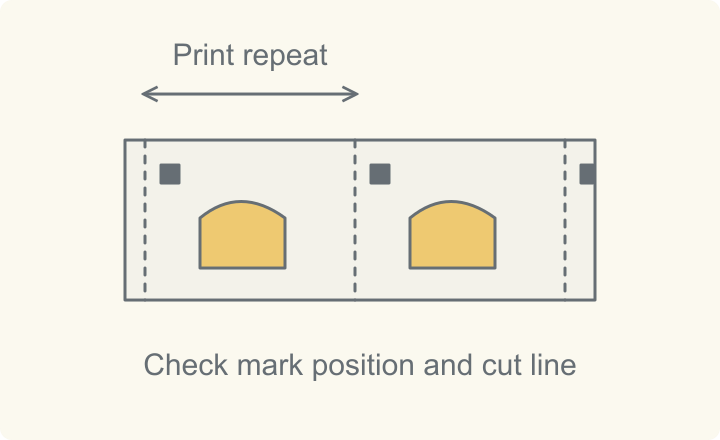
Match the artwork repeat to the machine. Repeat length and registration-mark position guide the print-to-cut relationship. Confirm the web width, repeat, mark requirements and unwind direction with the filling line.
Common applications
Snacks and confectionery
A pillow format can suit continuous packing of dry pieces or individual items. Product crumbs in the end seals, sharp corners and movement during packing need attention. Leave realistic clearance between the product and sealing jaws.
Powders and portion packs
Compatible equipment can form and dose the pack in one process. Powder contamination, static and settling behavior can affect the seal area and fill consistency. Evaluate actual production material rather than a hand-sealed sample alone.
Everyday goods and multipacks
Pillow bags suit printed wrappers displayed flat, hung or in trays. Add the puncture, compression and movement protection needed for the contents.
Advantages
Line-oriented format
Where compatible equipment is already installed, the format can fit the existing forming, filling and sealing workflow.
Broad front artwork area
The longitudinal seam can be planned away from key front information. Keep the print repeat aligned with the cut and seal positions.
Efficient flat-pack construction
A simple pillow format works well for flat, hanging and tray display.
Practical considerations
Flat display format
Standard pillow bags suit flat or hanging display, while gusseted formats provide an upright base.
Opening and reclosure options
Opening usually breaks an end or tear area. Repeated-use convenience requires a separate design decision.
Seam and machine sensitivity
Specify film friction, sealing range, unwind direction and registration for smooth machine running.
Compare bag types
Compared with three-side-seal bags
Pre-made flat pouches suit manual or separate filling. Pillow bags suit continuous machine packing. Compare loading, sealing, opening and production cost for the intended line. Read the three-side-seal bags guide.
Compared with stand-up pouches
Stand-up pouches offer upright display and convenient reclosure. Include filling equipment and changeover costs when switching from a pillow-bag line. Read the stand-up pouches guide.
Compared with printed rollstock film
Pillow bags are one finished pack format. Rollstock is the film supply used to make pillow bags and other formats on compatible equipment. Read the printed rollstock film guide.
Specifications for your quote
Provide the specifications you know and mark any open items as "to confirm".
Specification | What to provide or verify |
|---|---|
Seam and repeat | Specify fin or lap seal, finished dimensions, print repeat, end-seal width and cut position. |
Supply and equipment | Confirm pre-made bags versus rollstock and provide the relevant machine drawing. |
Product and protection | State contents, target fill, storage and distribution. Identify barrier, puncture, chemical or thermal requirements that need verification. |
Material and thickness | Choose the material structure and thickness for the application and agreed trials. |
Artwork and quantity | Provide print files or artwork status, finish, quantity per design and size, destination and required schedule. |
Sampling and documentation | Agree sample type, machine or filling trials, acceptance criteria and relevant supporting documents before order approval. |
Questions before ordering
Which pillow-bag supply formats are available?
Pillow bags are supplied as finished pre-made bags or produced from rollstock on the buyer’s form-fill-seal line. Specify the supply format in the inquiry.
How do fin and lap seals differ?
Fin seals join the inner sealing surfaces; lap seals overlap inner and outer surfaces. Specify the laminate and machine settings for the chosen seam.
How do I add reclosure to a pillow bag?
Specify the opening and reclosure method with the filling-line supplier. The film, seam layout and equipment must support that feature; an ordinary tear-open pillow bag does not reclose by itself.
What are the MOQ, sample lead time and production schedule?
For gravure-printed packaging, the MOQ is 6,000 linear metres of printed film. Normal production takes 15 working days for a first order and 10 working days for a repeat order, counted from signing the formal contract. Shipping time is additional. Send your material, dimensions, quantity per design and artwork status so we can confirm the sample plan.
What evidence should be agreed before approval?
Confirm the specification, sample approval, relevant trial results and acceptance criteria. For regulated applications, identify the market, intended use, document issuer and scope.
Prepare your packaging request
Send the product, target fill, storage or shipping conditions, filling method, quantity per design and destination. Include a sample or drawing if available. Configure back-seal pillow bags and request a quote.
Compare all packaging types · Food packaging material guide · Procurement checklist