Inside HUAYN’s Gravure Cylinder Workshop: The People Behind Print Precision

In Brief This article takes you inside HUAYN’s gravure cylinder production workshop to showcase how daily human oversight, structured prepress coordination, visual inspection, and disciplined communication transform packaging artwork into production-ready cylinders. Learn how our team’s operational habits support color consistency and print accuracy across flexible packaging runs for food, pet food, and consumer goods.
Who is Responsible for Turning Artwork into Production-Ready Cylinders?
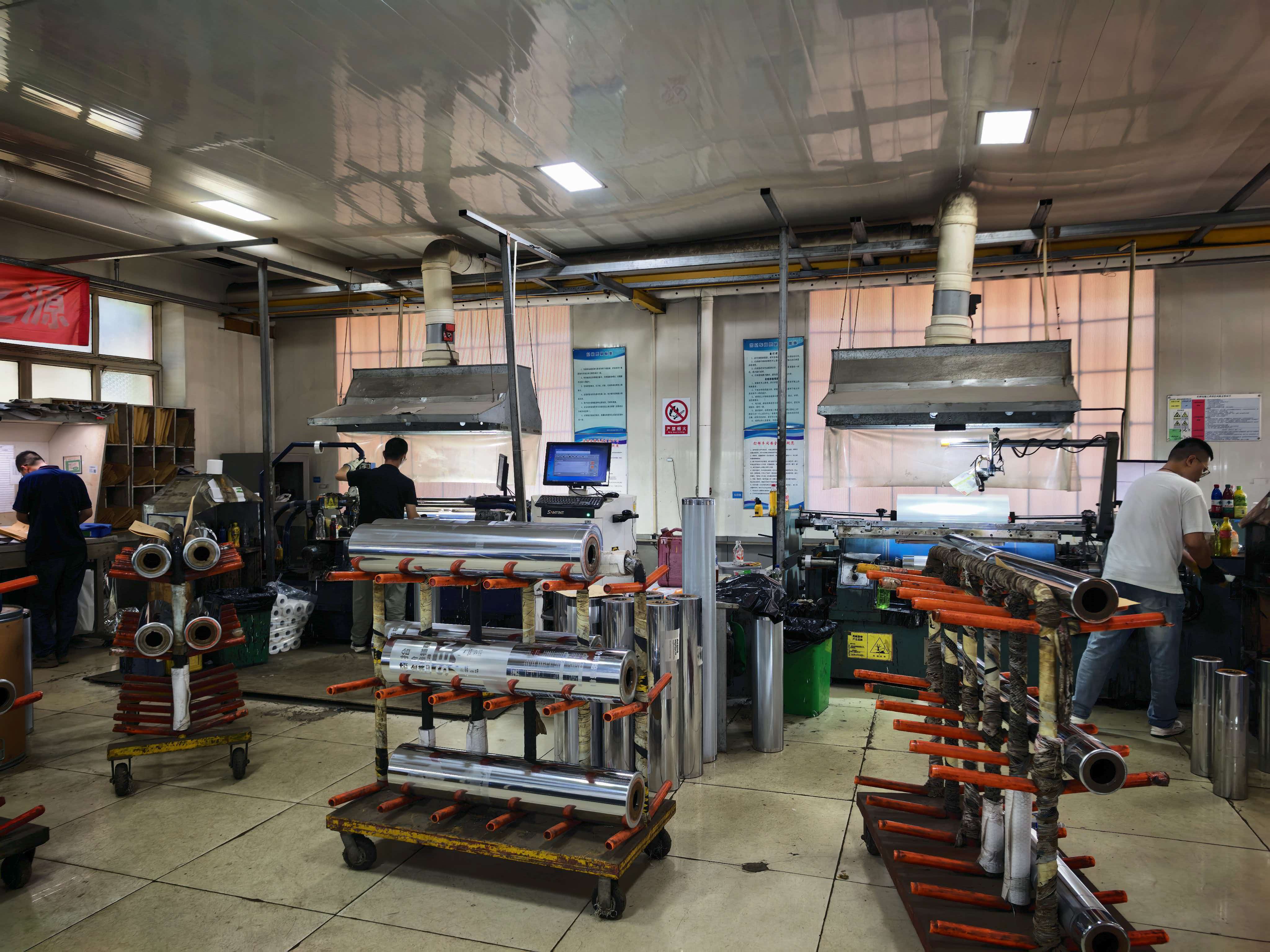
Walk through the doors of HUAYN’s gravure cylinder workshop, and you will not hear an automated factory floor running unattended. Instead, you will see a technician leaned over an inspection table, adjusting overhead task lighting to verify the mirror-like finish of a steel core. Across the aisle, another team member compares a printed proof directly against a raw, engraved cylinder surface before it moves to the next station.
While high-precision engraving equipment performs the mechanical carving and plating of the cylinder itself, machinery alone cannot guarantee a flawless print run. The real bridge between digital artwork and a finished bag on a store shelf is the human team inside the workshop. Every project relies on operators, prepress specialists, and quality inspectors who review production data, cross-check dimensions, track cylinder surfaces, and communicate across shifts to ensure that what was approved on screen translates accurately to substrate.

More Than Machine Operation: Human Responsibility in Manufacturing
A gravure cylinder—the engraved steel roller coated with copper and chrome used to transfer ink onto flexible packaging film—demands meticulous handling at every stage of its lifecycle. High-tech equipment executes the physical engraving of microscopic cells that hold ink, but human eyes and hands remain essential for verifying that every parameter matches the job ticket.
Behind each machine cycle is a structured series of manual checkpoints:
Information Verification: Checking substrate specifications, cell depth requirements, and color channel assignments against approved digital proofing files.
Visual & Surface Inspection: Examining cylinder surfaces for physical blemishes, scratches, or uneven plating prior to and after engraving.
Process Monitoring: Tracking electroplating baths, bath chemistry parameters, and diamond-stylus engraving progress in real time.
Documenting Work: Recording batch logs, cylinder serial numbers, and maintenance records to maintain complete job history.
Cross-Stage Communication: Handing off cylinders to the flexible packaging printing workshop with clear notes regarding ink behavior, screen angles, and mounting specs.
How Different Workshop Responsibilities Connect
In flexible packaging production, errors rarely originate from a single machine failure; they usually stem from miscommunication between stages. To prevent this, HUAYN integrates workflow management directly between the prepress department—the stage where digital packaging artwork is technicalized, color-separated, and adjusted for distortion—and the physical manufacturing line.
When digital files leave the prepress workstation, the production team cross-references the file dimensions against the raw steel core dimensions. Once the cylinder undergoes copper plating, polishing, electronic or laser engraving, and chrome hardening, it enters cylinder inspection, where technicians measure diameter, circumference, and surface integrity.
By maintaining direct, daily communication between the prepress designers, cylinder engravers, and print press operators, potential discrepancies in ink density, bleed, or trap are identified long before thousands of meters of film pass through a high-speed printing press.
Precise gravure cylinder production relies on automated engraving machinery, but consistent print execution depends on the disciplined oversight, manual verification, and daily cross-departmental communication of the workshop team.
The Value of Disciplined Daily Habits
In a high-throughput packaging facility, consistency is built on routine. Disciplined habits inside the workshop prevent small oversights from expanding into costly production downtime or color variation on repeat orders.
Operators follow rigorous physical handling procedures: cylinders are transported on dedicated padded cradles, stored in structured racks, clearly labeled with job tracking tags, and cleaned with specialized solvent solutions after inspection. Standardized handover checklists ensure that incoming shift operators understand the precise status of every job currently in the line.
These practical daily routines do not rely on claims of perfection; rather, they serve as systematic safeguards designed to capture and resolve everyday manufacturing variables before a cylinder reaches the printing press.
What This Means for Packaging Buyers
For overseas brand owners, packaging procurement managers, and supply-chain leaders, the internal habits of a cylinder workshop translate directly to commercial stability. When a supplier maintains rigorous human oversight, packaging buyers benefit from:
Accurate Interpretation of Artwork: Digital files are thoroughly evaluated for printability, preventing unexpected shifting in brand colors or micro-text clarity.
Clearer Communication: Prepress and production teams work from unified technical datasheets, eliminating ambiguity between design intent and factory capability.
Better Preparation for Printing: Thoroughly inspected cylinders seat smoothly into the printing press, reducing setup scrap and shorten proofing times.
Traceability for Repeat Orders: Archived production records and cylinder tracking numbers ensure that re-orders match historical color and print standards.
Fewer Surprises: Potential line issues are caught during workshop inspection rather than during active press runs.
Photo-Based Workshop Moments
1. Prepress Verification and Color File Review
In the workshop prepress area, an operator sits before high-resolution monitors comparing artwork color channels against physical print proofs. This step ensures that fine lines, nutrition tables, and brand logo colors are separated correctly across individual cylinder channels before physical engraving begins.
2. Physical Inspection of Cylinder Finish and Surface Quality
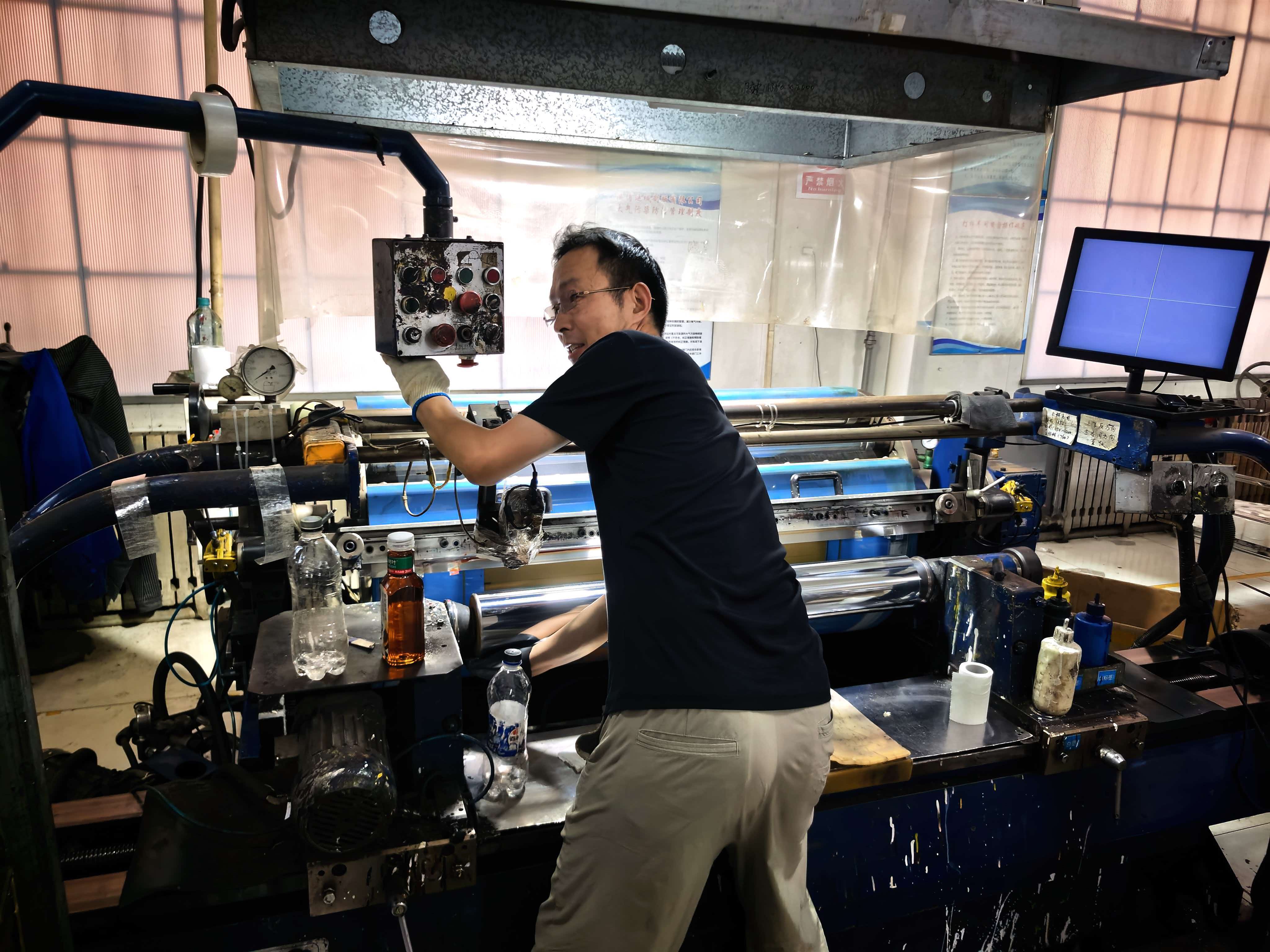
Positioned over a specialized inspection workbench, a technician wipes down the chrome surface of an engraved cylinder to check for micro-imperfections. Bright overhead illumination allows the inspector to spot microscopic scratches or uneven chrome coverage that could affect ink release on press.
3. Real-Time Engraving Process Monitoring
An operator monitors an electronic gravure engraving unit as a diamond stylus cuts millions of microscopic cells into the copper surface. The operator closely checks digital readouts and cell depth parameters on the control screen, confirming that engraving depth remains constant from edge to edge.
4. Structured Storage and Job Identification
Finished, inspected gravure cylinders are stored securely on horizontal support racks, clearly tagged with individual job numbers and customer identifiers. This organized storage prevents surface contact damage and guarantees quick, accurate retrieval for scheduled flexible packaging printing runs.
Conclusion
When sourcing flexible packaging, purchasing a gravure cylinder is more than ordering an engineered metal component; it is entrusting your brand identity to the people who handle that component daily. Precision machinery provides the mechanical capability, but it is the diligence, eye for detail, and clear communication of the workshop team that ensures your packaging artwork is faithfully recreated on film.
Are you preparing a new flexible packaging project or evaluating your current cylinder and print quality? Contact our technical team today to discuss your requirements.
Information to provide for a preliminary review:
Packaging artwork files (AI, PDF, or PSD format)
Bag or film dimensions (Width × Length × Gusset)
Number of printed colors
Target material structure (e.g., PET/AL/PE, PET/VMPET/PE)
Estimated order quantity
FREQUENTLY ASKED QUESTIONS (FAQ)
Q1: What does a gravure cylinder production team do? A1: A gravure cylinder production team oversees the transformation of digital artwork into physical printing rollers. They prepare digital files, manage copper and chrome electroplating, monitor electronic engraving, conduct surface and dimensional checks, and ensure every cylinder meets the precise specs required for high-speed flexible packaging printing.
Q2: Why does cylinder inspection matter in flexible packaging printing? A2: Cylinder inspection catches surface defects, incorrect cell depths, or dimensional variances before cylinders reach the printing press. Thorough manual and visual verification prevents ink transfer problems, streaking, and misregistration, saving valuable substrate and ink while ensuring long-term color consistency across print runs.
Q3: How do prepress and cylinder production work together? A3: Prepress and cylinder production collaborate by translating graphic designs into technical print files. The prepress team adjusts artwork for trapping, distortion, and color separation, providing exact digital files to cylinder engravers. Production teams verify these files against cylinder physical dimensions to guarantee precise cell carving.
Q4: What information should a buyer provide before cylinder production begins? A4: Packaging buyers should supply complete artwork files, precise film or pouch dimensions, the total number of colors, material structure layer specifications, and target press details. Providing accurate information early allows the prepress team to prepare proper color separations and ensures smooth cylinder engraving.